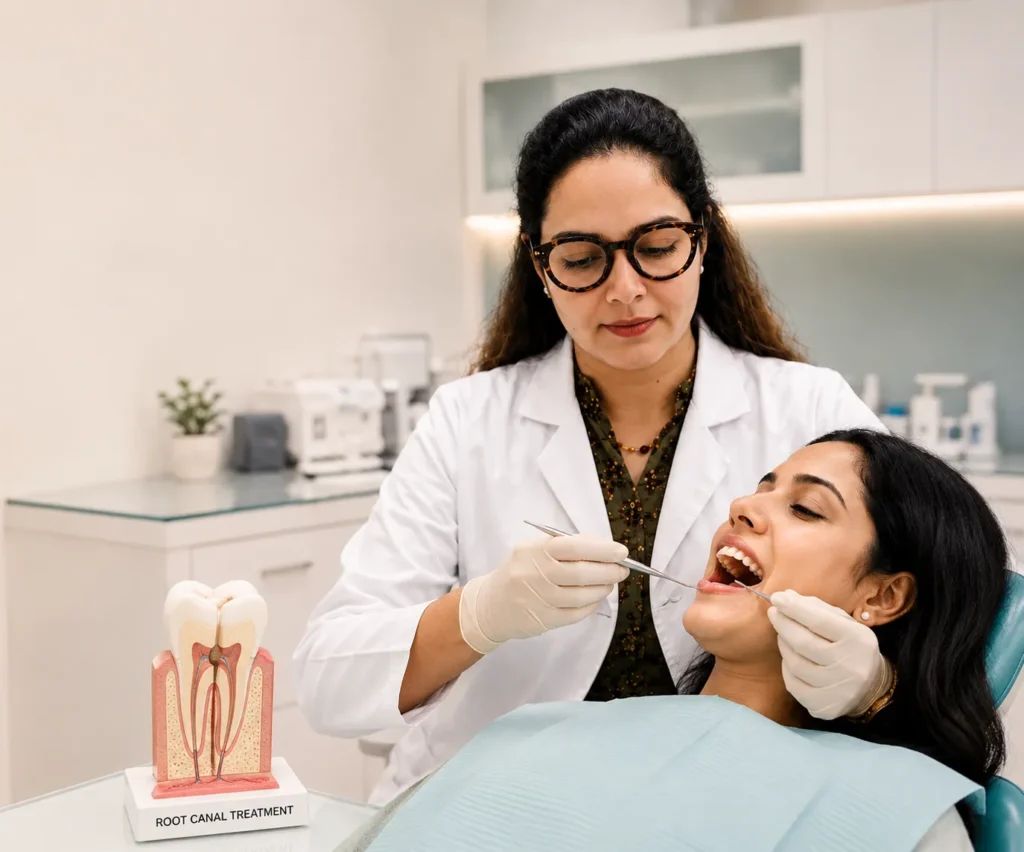
Save an infected or badly damaged tooth instead of losing it — root canal treatment removes the source of pain and infection, then seals and restores your tooth so you can bite, chew, and smile without discomfort.
A root canal treats infection or inflammation inside the soft pulp at the center of a tooth — usually caused by deep decay, a crack, or repeated dental procedures. Rather than extracting the tooth, we clean out the infected tissue, disinfect the inner canal, and seal it to stop the infection from spreading. Most root-canal-treated teeth are then protected with a crown, which helps you keep your natural tooth. Dr. Priyanka uses local anaesthesia to keep the procedure comfortable.
Contact Us
+91 96949-07696
Root Canal vs Tooth Extraction Which Is Right for You?
Root Canal Treatment (Save the Tooth)
Preserves your natural tooth and its function
Best when enough healthy tooth structure remains
Usually one to two visits; the number depends on the tooth and the infection
Tooth is typically capped with a crown afterward for strength
Keeps your bite and jawbone stable long-term
Tooth Extraction (Remove the Tooth)
Removes the tooth entirely, along with the infection
Considered when the tooth is too damaged or infected to save
Usually a shorter single-visit procedure
Leaves a gap that may need a bridge, implant, or denture later
Can lead to shifting teeth or bone loss if the gap isn't replaced
Not sure whether your tooth can be saved with a root canal or needs to be extracted? Dr. Priyanka will examine your tooth and X-rays at your consultation and recommend the option that best protects your long-term oral health.
Who May Need a Root Canal?
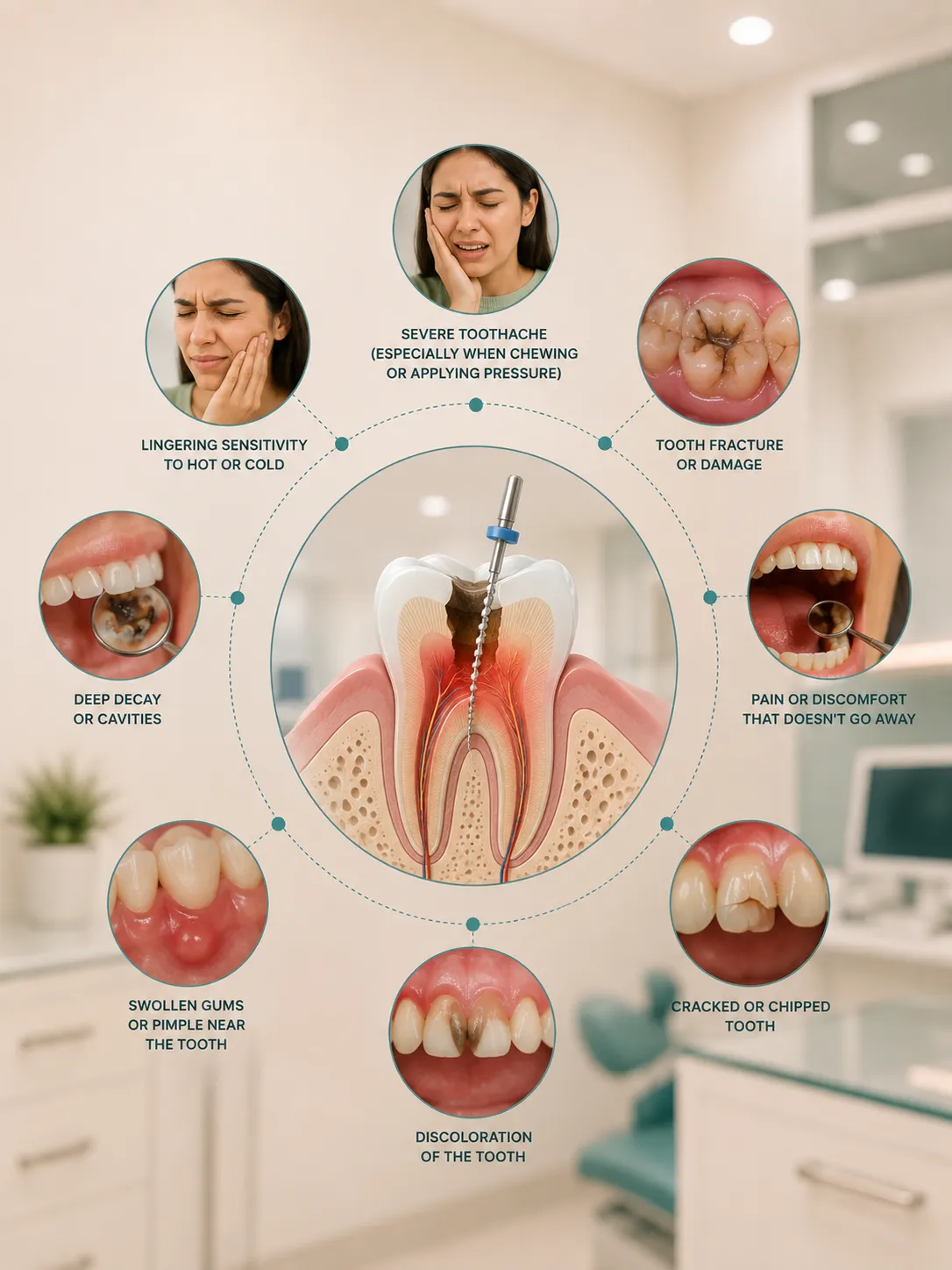
You may need root canal treatment if you have:
Persistent tooth pain, especially when chewing or applying pressure
Sensitivity to hot or cold that lingers well after the stimulus is gone
Swelling or tenderness in the gums near a specific tooth
A tooth that has darkened or discolored
A deep cavity, crack, or chip that has reached the inner pulp
Note: A clinical exam and X-rays are needed to confirm whether root canal treatment is right for your tooth.
How Does Treatment Work?
1
Consultation & X-Ray
We examine the painful tooth and take an X-ray to assess the extent of infection or damage before recommending treatment.
2
Local Anesthesia
The area around the tooth is fully numbed so you’re comfortable throughout the procedure.
3
Removing the Infected Pulp
A small opening is made in the tooth to remove the infected or inflamed pulp from inside the root canals.
4
Cleaning & Shaping the Canals
The empty canals are carefully cleaned, disinfected, and shaped to prepare them for sealing.
5
Filling & Sealing
The canals are filled with a biocompatible material and sealed to prevent bacteria from re-entering the tooth.
6
Crown Placement
In a follow-up visit, a custom crown is usually placed over the tooth to restore its strength and protect it long-term.
Does a Root Canal Hurt?
A root canal is done under local anaesthetic, so the tooth should be numb. Some soreness can follow and usually settles within days. Possible risks include persistent infection, a missed canal, a broken instrument and the need for retreatment or extraction. Your dentist will explain these before treatment.
Root canal treatment in Jaipur: what the procedure involves
Root canal treatment is carried out when the pulp inside a tooth is infected or inflamed, for example after deep decay or a crack. At our clinic in Mansarovar, Jaipur, Dr. Priyanka Parashar, BDS (State Dental Council Registration No. A01535), first examines the tooth and takes an X-ray to decide whether root canal treatment is suitable.
During treatment the tooth is numbed with local anaesthetic, the infected pulp is removed, the canals are cleaned and shaped, and the space is sealed. A crown is usually advised afterwards to protect the tooth. The number of visits depends on the tooth and the infection.
Some soreness afterwards is common. Possible risks include persistent infection, a missed canal, a broken instrument and the need for retreatment or extraction. Your dentist will explain these before treatment. If you have tooth pain, swelling or a broken tooth, book a consultation so the cause can be examined.
What to Expect During Treatment
First Few Days
Mild soreness or tenderness around the treated tooth is normal. Over-the-counter pain relief and soft foods help you stay comfortable.
First Week
Any lingering sensitivity fades, and most patients return to normal eating and chewing on that side of the mouth.
Crown Placement Visit
A follow-up visit completes your treatment with a custom crown, restoring the tooth’s full strength.
Long-Term
A treated tooth can last many years with a proper crown and good oral hygiene. No result can be guaranteed.
A root canal only ends the infection — how you care for the tooth afterward is what keeps it strong for years to come.
Caring for Your Tooth After a Root Canal
Do's
Take any prescribed antibiotics or pain medication exactly as directed
Eat soft foods until any numbness wears off, to avoid biting your cheek or tongue
Brush and floss normally, being gentle around the treated tooth at first
Return for your follow-up visit to have a permanent crown placed
Avoid chewing directly on the treated tooth until it's fully restored
Keep up regular dental check-ups to monitor the tooth long-term
Don't
Don’t chew hard or sticky foods on the treated tooth before the crown is placed
Don’t skip your crown placement appointment — an unprotected tooth can crack
Don’t ignore ongoing pain, swelling, or a bad taste near the treated tooth
Don’t smoke, as it can slow healing and affect long-term success
Don’t delay treatment if you suspect a new infection — early care saves teeth
Contact the clinic if you notice: severe pain, swelling in your face or gums, a bad taste or odor near the tooth, or a crown that feels loose.
Choosing Root Canal Treatment vs Extraction
In most cases, saving your natural tooth with a root canal is the better long-term choice — it preserves your bite, jawbone, and the appearance of your smile without the need for a replacement tooth. Extraction may be necessary when a tooth is too damaged, cracked below the gumline, or infected to be saved. Dr. Priyanka will examine your tooth and X-rays to recommend the option that protects your oral health and budget best.
18+
TRUSTED EXPERIENCE
Book Your Dental Appointment Today
Book a consultation to discuss your treatment options.
Emergency Help
+91 96949-07696
Meet Your Dentist
Dr. Priyanka Parashar focuses on saving natural teeth whenever possible, when it is possible. The aim of treatment is to remove the infection, relieve pain and restore the tooth.
Most root canals are completed in one to two visits (the number depends on the tooth and the infection), plus a follow-up visit for the permanent crown.
The choice depends on the condition of the tooth. Saving the tooth is often preferred when enough healthy tooth remains; extraction is sometimes necessary if the tooth is too damaged.
PHCC — Dr. Priyanka Parashar, Mansarovar, Jaipur - Raj.
Schedule Hours:-
Mon – Sat : 10:00AM – 05:00PM
Sunday : On Call
Dr. Priyanka Parashar, BDS, is a dental surgeon practising in Mansarovar, Jaipur. Services include cosmetic dentistry, root canal treatment and gum treatment. State Dental Council Registration No. A01535.