


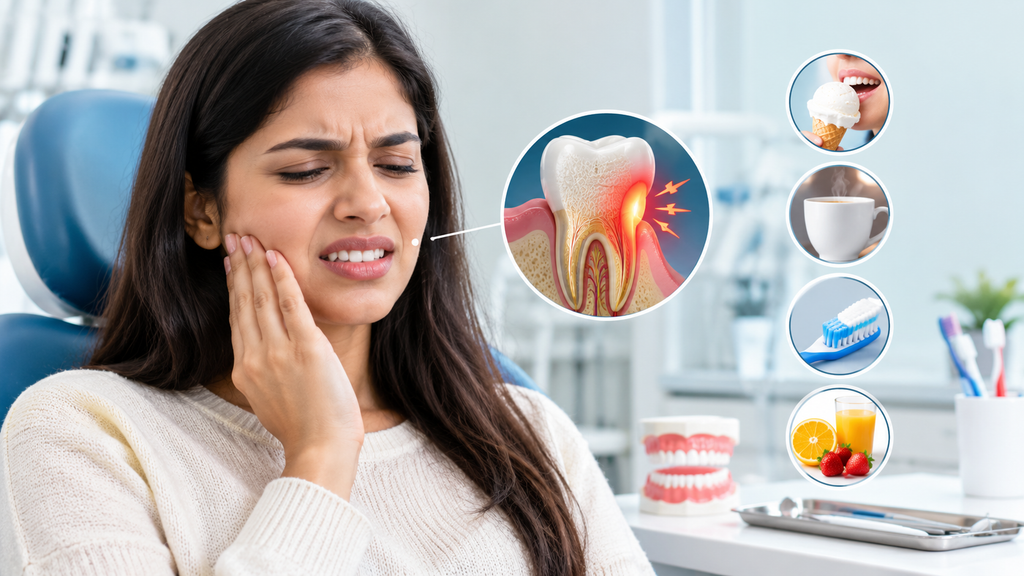
If you’ve ever experienced a sudden, sharp zing when you bite into your ice cream or sip on a hot cup of tea, you are by no means the only one suffering from tooth sensitivity. It is one of the most frequent dental issues for people of all ages, and yes, children have it too; hence, a good dental practice like Child Dental Care in Jaipur would include sensitivity screening as a routine part of a check-up. The good news? It’s often easy to manage, and in many cases, even preventable, once you know what is really causing it.
What Causes Tooth Sensitivity?
Sensitivity occurs when the outer protective layer of teeth (the enamel) is compromised, leaving the underlying dentin layer exposed. The dentin contains small tubules that connect directly to the nerve and can give a sudden tingle of pain with any hot, cold, sweet, or acidic food or drink. Common causes include:
- Acidic foods, sodas, or excess citrus.
- Aggressive brushing with a hard-bristled toothbrush.
- Gum recession exposing tooth roots.
- Teeth grinding (bruxism) at night.
- Cavities or cracked teeth revealing inner layers.
- Recent dental work causing temporary sensitivity.
It can be a single cause or years of habits piling on.
How Is It Treated?
Treatment really depends on what is causing the sensitivity, and a correct diagnosis is more important than guesswork and experimentation with different brands of toothpaste. You should do the following:
- Desensitizing toothpaste – formulated to block pain signals from reaching the nerve over time
- Fluoride treatments – professionally applied to strengthen weakened enamel
- Dental bonding – covering exposed root surfaces when recession is the culprit
- Night guards – for patients whose sensitivity stems from grinding
- Gum grafting – in more advanced cases of gum recession
- Root canal therapy – reserved for severe cases where the nerve itself is compromised
A lot of people will never need anything as comprehensive as a root canal. Sometimes it’s as simple as changing toothpaste and adding a professional fluoride application.
Prevention Matters More Than You’d Think
One of those dental problems is easier to avoid than to repair. The following few habit changes are simple but effective:
- Switch to a soft-bristled toothbrush and ease up on pressure while brushing
- Limit acidic drinks, or use a straw to reduce contact with teeth
- Wait at least 30 minutes before brushing after consuming acidic food or drink
- Wear a night guard if you grind your teeth
- Don’t skip regular dental checkups; catching enamel wear early prevents bigger problems later
That’s where a dentist you can trust comes into play, particularly for a family with various sensitivity ages at once. Dr. Priyanka Parashar has focused her practice on just this sort of individualized, proactive treatment, which is focused on how much more is happening and dealing with it before it becomes a bigger issue.
Why Do You Need to Visit a Dentist?
If occasional and mild, home care may be sufficient. When discomfort becomes persistent, aggravates over time, or occurs with visible damage to a tooth, however, it’s time to get it checked out properly instead of “bearing up.” When the dentist is comfortable and doesn’t make judgmental comments, many of the patients, especially those who prefer talking to the female dentist in Jaipur, are able to discuss the symptoms at an earlier stage than when they start to cause pain.
Final Thoughts
Don’t suffer from tooth sensitivity, and it is not always as difficult to correct as it seems when it happens. In most cases, it’s a matter of locating the actual cause (which may be a brushing technique, worn enamel, or any other issue) and then treating the condition with a proper mix of at-home treatment and professional advice. The important point is not to wait until the condition becomes chronic. Normally, a dentist can help you put your smile back to its former glory in no time with a little talk, a few little changes, and a little patience.