

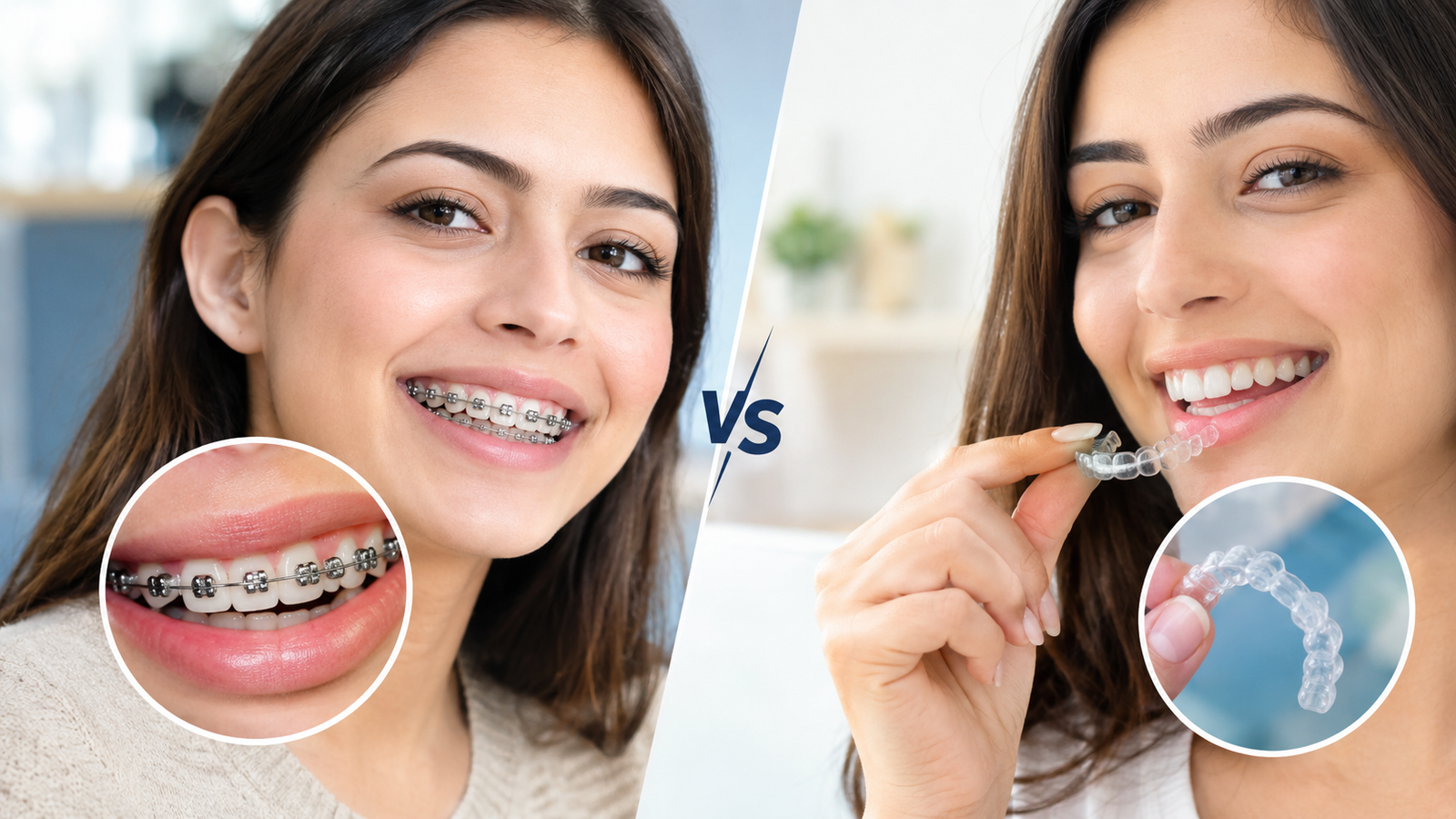
With the many different types of orthodontic treatments that are available today, it can be quite confusing to decide on the right one that is available today; it can be quite confusing to decide on the right treatment to choose. Whenever you are looking around for braces treatment in Jaipur, you surely must have stumbled upon invisible aligners as an option. They both work well for teeth that are crooked, but in very different ways. Let’s review the major differences so you can make an informed decision.
Understanding Traditional Braces
Braces have been the gold standard in orthodontics for decades, and for good reason.
- How they work: Metal or ceramic brackets are bonded to each tooth and connected with wires that gradually shift teeth into position.
- Best for: Complex bite issues, severe misalignment, and cases requiring significant tooth movement.
- Maintenance: Fixed in place, so there’s no risk of losing or forgetting them, but they do require extra care while brushing and flossing.
- Visibility: Noticeable, though ceramic options offer a more discreet look than traditional metal.
Understanding Invisible Aligners
Whether you’re considering Invisible Aligners in Jaipur, you likely appreciate their modern and subtle look.
How they work: They consist of a series of specially formed clear plastic trays that gradually move the teeth one by one, and each tray will be worn for 1 to 2 weeks before moving to the next tray.
Ideal for: Mild to moderate alignment issues, gaps, and minor crowding.
Maintenance: Removable – You can eat and drink freely, but must be worn 20-22 hours per day for maintenance.
The visibility: It is almost imperceptible, ideal for working professionals and anyone who would like to avoid giving the “metal mouth” appearance.
Aligners can be taken off, which allows for much easier brushing and flossing than braces.
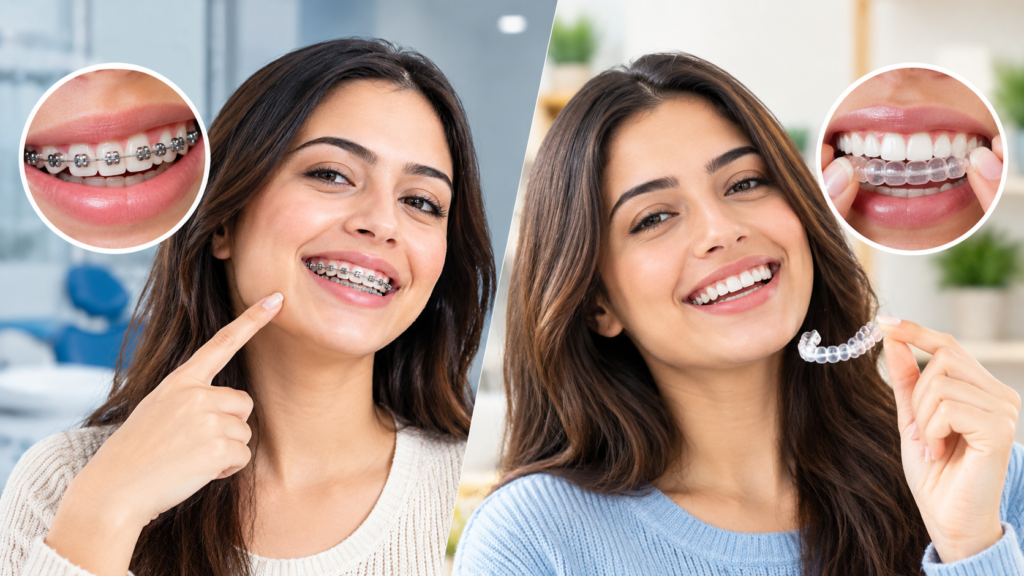
Comparing the Two: What really matters
The practical factors generally determine the outcome when you are making your choice.
Treatment complexity—Braces work best for more complicated cases, whereas aligners work best for simpler cases.
Lifestyle—Removable aligners are more flexible if you participate in sports, sing, or go to lots of events.
Discipline—Aligners will work only if worn consistently; braces don’t need to be worn because they are attached.
Budget – Braces are usually cheaper, but braces are customized and are a possibility that can increase the costs of braces.
Treatment duration—This will depend on the individual case, but both options will involve a similar amount of treatment commitment (of course adding in follow-up visits).
Request a professional opinion
Patients at the clinic of Dr. Priyanka Parashar are given a comprehensive examination of their bite, jaw anatomy, and cosmetic aspirations prior to recommending treatment. Conditions that seem simple on X-rays and impressions, such as an overbite, gaps, or crowding, can sometimes be more complex when considered.
- Your good orthodontist will take you through:
- Your existing dental alignment and any existing bite problems.
- Realistic treatment timelines for each treatment option.
- Cost comparisons designed to fit your specific situation
- Provisions for long-term retention after treatment are completed.
Final Thoughts
The braces vs. aligners question is a difficult one, and there is no one right answer. Both methods can lead to stunning and long-lasting results when paired with the right applicant. If things are way out of whack, traditional braces are probably more dependable. If you’re looking for a more subtle and flexible option that could be used for mild corrections, you might want to consider invisible aligners, though.
The best first move is a consultation, which examines your teeth, habits, and goals to make sure you end up with a plan that fits your life, not your smile.