Regain the confidence to smile, eat, and speak comfortably with our custom-made crowns, bridges, and dentures. We provide durable, natural-looking restorations designed to restore both the function and beauty of your smile.
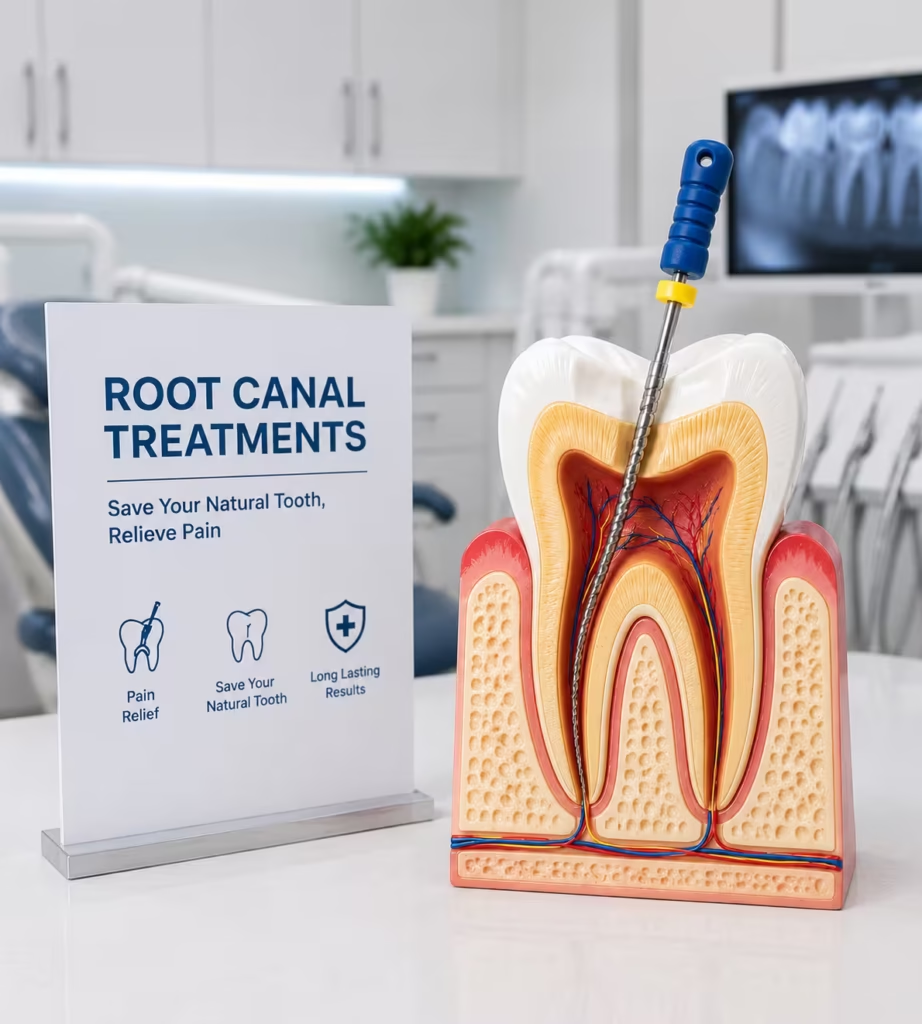
A root canal treatment is designed to save a severely damaged or infected tooth while relieving pain and preventing further infection. Using advanced techniques and modern equipment, our experienced dentists carefully remove the infected pulp, clean the root canals, and restore the tooth with long-lasting protection. Our goal is to preserve your natural tooth and ensure a comfortable, pain-free treatment experience.
Contact Us
+91 96949-07696
Watch: How Atraumatic Extraction Works
Benefits of Atraumatic Tooth Extraction
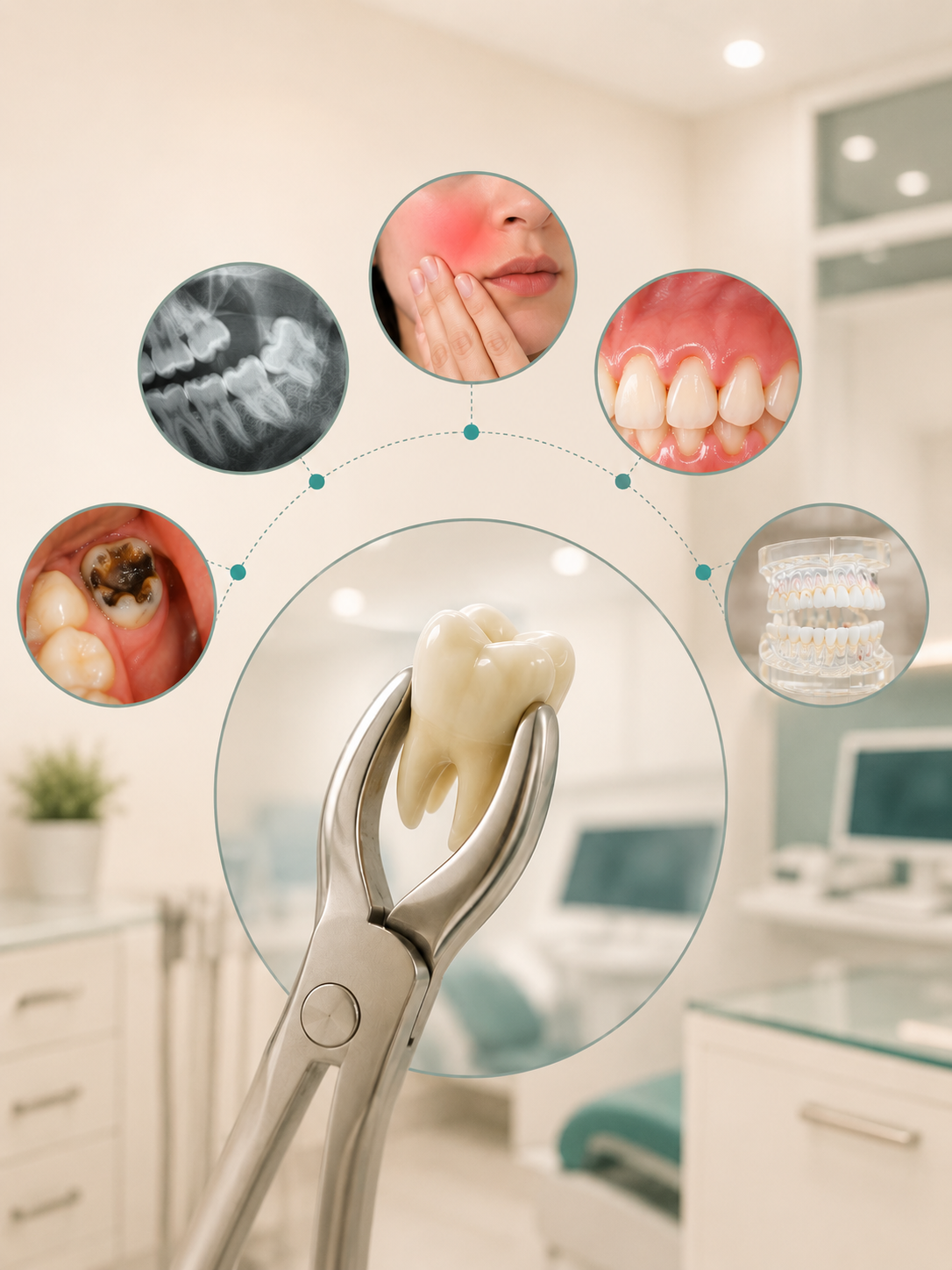
Atraumatic Extraction
Minimally invasive, controlled technique
Focuses on preserving bone and gum tissue
Uses specialized elevators and periotomes
Ideal when a future dental implant is planned
Typically less post-operative swelling
Conventional Extraction
May involve more forceful manipulation
Greater potential stress on surrounding tissue
Uses standard extraction forceps
Suitable for many routine extractions
Recovery experience varies by case
After a proper diagnosis and evaluation of your tooth position, root shape, and overall oral health, will recommend the most suitable extraction technique for you.
Who May Need an Atraumatic Extraction?
This approach is recommended if you have:
A severely decayed or fractured tooth
A tooth that cannot be restored with a filling or crown
A tooth being removed to prepare for a dental implant
A tooth in a position where preserving bone is especially important
Certain impacted or difficult-to-access teeth, depending on clinical assessment
A clinical examination and X-ray are needed to confirm whether this technique is right for your case.
How Does the Procedure Work?
1
Examination & X-ray
Your dentist evaluates the tooth, root structure, and surrounding bone before planning the approach.
2
Local Anesthesia
The area is numbed so the procedure is comfortable throughout.
3
Gentle Separation
Specialized instruments carefully loosen the tooth from the surrounding ligament, minimizing pressure on the bone.
4
Controlled Removal
The tooth is removed with a slow, deliberate motion rather than forceful rocking.
5
Socket Inspection & Cleaning
The socket is checked and cleaned to support healthy healing.
6
Post-Extraction Care
You’ll receive aftercare instructions and, if needed, a follow-up plan.
Is Atraumatic Tooth Extraction Painful?
Local anesthesia is used to numb the tooth and surrounding tissue before the procedure begins, so you shouldn’t feel pain during the extraction itself — most patients feel pressure rather than pain. Because the technique is gentler on surrounding bone and gum tissue, many patients report less discomfort afterward compared with a traditional extraction. Some soreness and mild swelling in the first day or two is normal and can usually be managed with the aftercare guidance your dentist provides.
Recovery After Atraumatic Extraction
First 24 Hours
Mild bleeding and swelling are normal. Rest and avoid disturbing the extraction site.
Days 2–3
Swelling typically starts to subside. Continue any prescribed medication and a soft-food diet.
About a Week
Most patients feel back to normal daily activity while the socket continues healing beneath the surface.
Full Healing
Complete bone and tissue healing takes several weeks to a few months, depending on the individual.
Healing time varies by patient and by tooth — will give you a timeline specific to your case.
Aftercare Instructions
Do
Rest and avoid strenuous activity for 24 hours
Apply a cold compress to reduce swelling
Eat soft, cool foods for the first day or two
Take medications exactly as prescribed
Gently rinse with warm salt water after 24 hours
Keep your follow-up appointment if advised
Don't
Don't rinse vigorously or spit forcefully in the first 24 hours
Don't smoke or use tobacco products
Don't drink through a straw
Don't touch or probe the extraction site
Don't eat hard, crunchy, or very hot food right away
Contact us if you notice: heavy or persistent bleeding, increasing swelling after 2–3 days, fever, severe or worsening pain, or an unpleasant taste/odor that doesn’t improve. These can be signs of a complication such as dry socket or infection.
Atraumatic Extraction for Dental Implants
If you’re planning to replace the extracted tooth with a dental implant, the technique used for removal matters. Because atraumatic extraction preserves the socket walls and surrounding bone, it can help maintain the bone volume needed for a future implant — sometimes making implant placement more predictable. Ask your dentist whether this approach is suitable if you’re considering an implant.
18+
TRUSTED EXPERIENCE
100%
PERSONALIZED CARE
15+
Advanced Treatments
Book Your Dental Appointment Today
Don't let dental problems affect your smile and confidence. Our experienced dentists provide personalized treatments in a comfortable and hygienic environment. Schedule your consultation today and take the first step toward a healthier, brighter smile.
Emergency Help
+91 96949-07696
Meet Your Dentist
Dr. Priyanka Parashar performs atraumatic extractions using a gentle, precision-focused approach designed to protect your bone and gum tissue and support a smoother recovery. She’ll walk you through your options, including implant planning, at your consultation.
Our Patient Testimonials
Rahul Sharma
I had an amazing experience at the clinic. The dentist explained every step of my treatment, and the entire process was painless. Highly recommended!
Priya Verma
The staff was very friendly, and the clinic was clean and well-maintained. My smile looks much better after the treatment. Thank you for the excellent care!
Amit Singh
I visited for a root canal treatment and was surprised by how comfortable the procedure was. The doctors are professional, caring, and highly experienced.
It’s generally gentler on surrounding tissue and bone, which can benefit healing and future implant planning — but your dentist will recommend what’s best for your specific tooth.
Most patients resume light daily activity within a day, avoiding strenuous exercise for a few days.
Visit Me At
PHCC — Dr. Priyanka Parashar
Mansarovar, Jaipur - Raj.
Your Best Smile Is One Appointment Away
Whether it’s a routine checkup or a smile transformation, Dr. Priyanka Parashar and her team are here to give you care that’s expert, gentle, and genuinely personal.
PHCC — Dr. Priyanka Parashar, Mansarovar, Jaipur - Raj.
Schedule Hours:-
Mon – Sat : 10:00AM – 05:00PM
Sunday : On Call
Award-winning dental surgeon Dr. Priyanka Parashar offers expert cosmetic dentistry, root canal, gum treatment & more. 18+ years experience. Book your appointment today.